
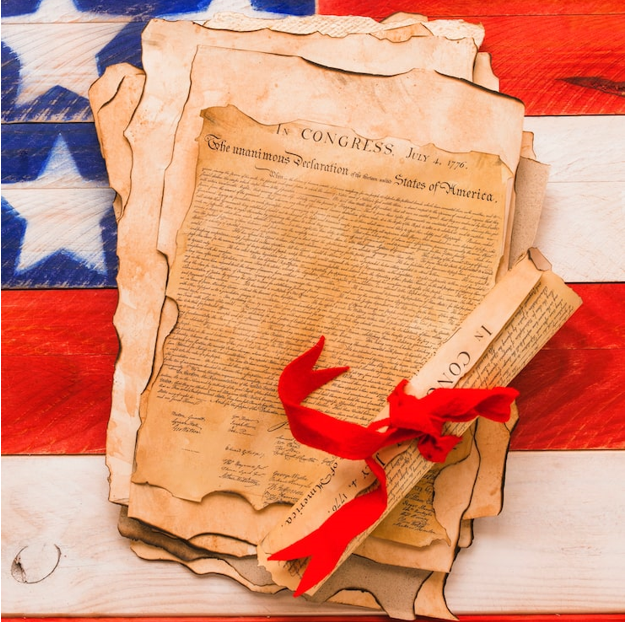
The First Amendment to the United States Constitution protects several fundamental freedoms, including freedom of speech, religion, the press, peaceful assembly, and the right to petition the government. Among these protections, freedom of speech has been one of the most frequently debated and interpreted by the courts. Over the years, judicial decisions have helped define the scope of this constitutional right and clarified how it applies in different situations.
Many Famous First Amendment Cases have established important legal principles that continue to influence American society. These Landmark Free Speech Cases demonstrate how the courts have balanced individual rights with public interests while responding to changing social and political circumstances.
Why Court Decisions Matter
The First Amendment contains broad language, but it does not answer every question about free expression. Courts play a critical role in interpreting constitutional protections when disputes arise. Through judicial review, courts determine how constitutional rights apply to specific situations involving schools, workplaces, public demonstrations, political speech, and other forms of expression. As society evolves, new legal questions continue to emerge, making court decisions an essential part of constitutional law.
Schenck v. United States (1919)
One of the earliest Famous First Amendment Cases was Schenck v. United States. During World War I, Charles Schenck distributed leaflets encouraging resistance to the military draft. He was charged under the Espionage Act.
The U.S. Supreme Court upheld his conviction, introducing the “clear and present danger” test. Although later decisions refined this standard, the case became an important milestone in understanding the limits of protected speech during periods of national conflict.
Tinker v. Des Moines Independent Community School District (1969)
Among the most influential Landmark Free Speech Cases, Tinker v. Des Moines involved students who wore black armbands to school to protest the Vietnam War.
The Supreme Court ruled that students do not lose their constitutional rights to free speech simply because they attend school. At the same time, the Court recognized that schools may regulate speech if it substantially disrupts the educational environment. The decision continues to shape student speech rights across the United States.
New York Times Co. v. United States (1971)
Often called the “Pentagon Papers Case,” New York Times Co. v. United States addressed whether the federal government could prevent newspapers from publishing classified documents related to the Vietnam War.
The Supreme Court ruled in favor of the newspapers, emphasizing the strong constitutional protection against prior restraint. The decision reinforced the importance of a free press in holding governments accountable and informing the public.
Brandenburg v. Ohio (1969)
Another significant case that appears in discussions of Famous First Amendment Cases is Brandenburg v. Ohio. The Court considered whether inflammatory political speech could be punished under criminal law.
The ruling established that speech advocating unlawful conduct is generally protected unless it is intended and likely to produce imminent lawless action. This standard continues to guide courts when evaluating controversial political speech.
Texas v. Johnson (1989)
One of the most widely discussed Landmark Free Speech Cases involved flag burning during a political demonstration. In Texas v. Johnson, the Supreme Court ruled that burning the American flag as part of a political protest is a form of protected expression under the First Amendment. Although many people found the act offensive, the Court concluded that constitutional protections extend to symbolic political expression.
The decision highlighted an important principle: the government generally cannot prohibit speech simply because it is unpopular or offensive.
How These Cases Continue to Shape Free Speech
These court decisions remain relevant because they establish legal standards that continue to guide judges, lawmakers, educators, journalists, and citizens.
Modern debates involving social media, political demonstrations, campus expression, and public protests often reference principles established by earlier Supreme Court rulings. Although technology and communication methods have changed significantly, many constitutional questions still rely on precedents established decades ago.
Understanding these decisions helps explain why free speech protections continue to evolve while remaining grounded in constitutional principles.
The Importance of Constitutional Interpretation
The history of First Amendment law demonstrates that constitutional rights are interpreted through individual cases rather than fixed rules that apply to every situation. Courts must often balance freedom of expression with competing concerns such as public safety, national security, and the rights of others. This ongoing process allows constitutional protections to respond to new circumstances while preserving the fundamental principles established by the First Amendment.
Conclusion
The history of Famous First Amendment Cases reflects the continuing effort to define and protect one of America’s most important constitutional freedoms. Decisions involving student protests, political advocacy, press freedom, and symbolic expression have shaped the legal understanding of free speech for generations.
These Landmark Free Speech Cases continue to influence public debate, judicial interpretation, and constitutional law. By studying these important rulings, readers can better understand how the First Amendment has evolved and why freedom of speech remains a cornerstone of democratic society.